If you’re searching for an efficient wall-mounted air conditioner to cool a room without window access, you’ve come to the right guide. This article matches common buyer needs with five relevant wall- or wall-adjacent cooling options, highlighting who each unit is best for, and where they excel. Ideal buyers include apartment renters wanting no-window installs, small-office users needing compact yet powerful cooling, and those seeking energy-efficient refrigerants. The table below summarizes the top picks to help you compare at a glance.
| Product | BTU / Capacity | Best For |
|---|---|---|
| LG 10,000 BTU Through the Wall | 10,000 BTU | Medium rooms up to 440 sq ft; energy efficiency emphasis |
| LG 7,800 BTU Through the Wall | 7,800 BTU | Smaller rooms up to 330 sq ft; wall sleeve install |
| Mini Split Air-Conditioner – Ductless | Small to mid spaces | Renters or spaces needing no window venting |
| Portable Air Conditioner, Tower Fan Style | Portable, ventless design | Very small spaces; no permanent installation |
| Split Mini Portable Air Conditioner – No Vent | No venting required | Renter-friendly, wall-mounted look with no vents |
LG 10,000 BTU Through the Wall AC

Best for: Medium-sized rooms up to 440 sq ft; users prioritizing energy efficiency. This LG unit uses R-32 refrigerant with an EER of 10.7 for improved efficiency. It is designed for through-the-wall installation rather than standard window venting, and it includes 3 cooling speeds plus 3 modes, with a turbo option and an Energy Saver setting that circulates air while turning off the compressor when the set temperature is reached. Dry mode removes moisture and 4-way deflection provides flexible airflow. Choose this if you want strong cooling with a compact wall installation and high energy efficiency. Caution: wall installation requires proper venting compatibility; not ideal for standard windows.
LG 7,800 BTU Through the Wall AC

Best for: Smaller rooms up to 330 sq ft; budget-conscious buyers needing a through-the-wall solution. This LG model also uses R-32 refrigerant with an EER of 10.7. It requires a compatible wall sleeve (24.5” to 27” width) for installation and provides 3 cooling speeds and 3 modes, plus Energy Saver and Dry modes. It’s a solid pick when you want reliable wall venting with efficient operation. Caution: requires proper wall sleeve dimensions; not a plug-and-play window unit substitute.
Mini Split Air-Conditioner – No Window

Best for: Rooms where traditional window units aren’t possible; renter-friendly with no permanent fixtures. This wall-mounted mini split is designed to vent without a window or external venting. It emphasizes a contemporary aesthetic and energy efficiency, with rapid humidity reduction and adaptable placement for kitchens, bedrooms, or small offices. It’s ideal if you want a discreet, wall-mounted appearance. Caution: actual cooling performance can vary by room and installation specifics; ensure wall brackets and clearances meet requirements.
Portable Air Conditioner, Tower Fan Style
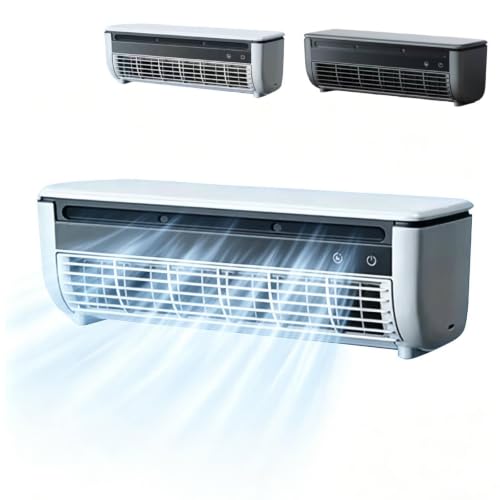
Best for: Very small spaces such as single bedrooms or offices where a vented window solution is impractical. This ventless cooling option uses a wall-mounted, space-saving design and emphasizes rapid airflow and humidity reduction without complex piping. It offers fast temperature drop and easier installation—great for renters. Caution: performance may be limited in larger rooms; not a substitute for a full-size through-the-wall unit in bigger spaces.
Split Mini Portable Air Conditioner – No Vent

Best for: Renters and small spaces seeking a no-vent solution with a wall-mounted look. This no-vent mini split portable option provides cooling without permanent ductwork or windows. It includes 3 speeds and emphasizes quiet operation and a sleek, wall-ready profile. Caution: no venting means heat and humidity management depends on internal design; ensure space plans align with expected performance.
Buying Guide
What should you consider when choosing a wall-accessible AC? Start with room size and BTU needs. Look for models rated for your square footage. Energy efficiency matters for ongoing operating costs; refrigerants like R-32 can provide better efficiency. Installation type is crucial: through-the-wall units require appropriate wall sleeves and mounting considerations, while ventless or no-vent mini splits suit renters or spaces without exterior venting. Noise level, airflow patterns (4-way deflection), and moisture removal (Dry mode) affect comfort. If you’re balancing budget with performance, prioritize models designed for your room size and verify installation requirements before purchase.
Installation and Compatibility Questions
- Do you have a compatible wall sleeve or space for a through-the-wall unit?
- Is venting feasible if you choose a traditional window-style installation?
- Will the unit’s airflow patterns cover your seating or sleeping areas?
Usage and Comfort Considerations
- Are you sensitive to compressor noise, and do you need a dry mode for humidity control?
- Is a quick temperature drop important, or is steady cooling and air circulation sufficient?
- Do you prefer a modern look that blends with interior design?
Energy and Long-Term Costs
- Is the refrigerant R-32 present, and does it offer higher efficiency?
- What is the expected maintenance for dry modes and moisture removal?
FAQ
- What is the advantage of a through-the-wall AC versus a portable unit?
– Through-the-wall units typically provide stronger, more consistent cooling for dedicated rooms and often cleaner exterior venting, while portable units offer easier relocation but may be less efficient in larger spaces. - Can wall-mounted, no-vent mini splits really cool effectively?
– They can provide effective cooling in compact spaces and without external venting, but performance depends on room size and proper placement. - What does Dry mode do?
– Dry mode reduces humidity, which can improve comfort in addition to cooling, especially in humid climates. - How important is an Energy Saver mode?
– Energy Saver can reduce running costs by cycling the compressor while circulating air, helping maintain set temperatures with lower energy use. - What should renters verify before selecting a wall AC install?
– Confirm wall sleeve compatibility, clearance requirements, and whether the unit needs permanent installation or can be a temporary solution.