Answering the search for a whole house cooling system, this guide highlights five practical options designed to cool most American homes efficiently. These picks cover large and multi-story homes, energy efficiency, and quiet operation. The top choices emphasize compatibility with existing ducts, inverter or variable-speed technology, and durable dampers. Best suited buyers include homeowners upgrading from window units, builders planning new installations, and anyone seeking quieter, energy-saving cooling across all levels of the home.
Summary Table of Selected Products
| Product | Key Strength | Best For | Notes |
|---|---|---|---|
| Centric Air 3.4(R13) | R-13 insulated damper; ultra-quiet operation | Two-story homes up to 3400 sqft | Two-speed remote with temp & timer |
| ROVSUN 3 Ton Ducted | Inverter technology; 19 SEER2 | Large spaces requiring strong cooling | Pre-charged, versatile installation |
| MRCOOL VersaPro | 17 SEER2, multi-position | Mid-sized homes with ducted systems | DIY friendly line set included |
| Senville 2 Ton Central AC Inverter | Inverter, variable speed | Homes up to ~1,500 sqft | Compact form, flexible cooling |
| Centric Air 3.4(R5) | R5 damper, low voltage controls | Two-story homes up to 3400 sqft | Quiet, 3.4 model with timer |
Centric Air 3.4(R13) Whole House Fan

The CentricAir 3.4(R13) is a powerful whole house fan designed for two-story homes up to 3400 sqft and single-story homes up to 2400 sqft. It uses a 3242 CFM capability and includes an R-13 insulated damper with a commercial-grade actuator, tested for long cycle life. This model emphasizes quiet operation thanks to a German-engineered 5-blade design and acoustical ductwork. Best for homes needing strong air exchange with minimal noise, especially in multi-story layouts.
Best for two-story homes where you want a silent, energy-efficient upgrade. Choose this if you value a thermally tight damper and extended damper longevity. A potential limitation is the need for adequate attic ventilation (about 4.5 square feet) to maximize performance.
ROVSUN 3 Ton Ducted Central System
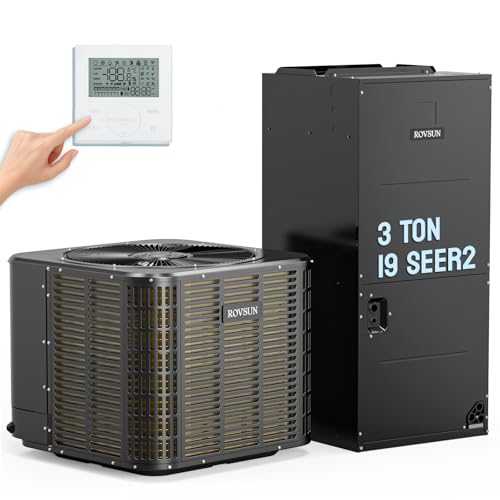
The ROVSUN 3 Ton 34000 BTU ducted central air conditioner with heat pump and inverter delivers strong cooling and heating for larger areas. It uses full inverter technology to avoid stop-start waste, maintaining precise temperatures and offering energy savings. It fits flexible installation needs with vertical or horizontal configurations and is pre-charged with eco-friendly refrigerant. Best for large homes needing stable climate control and quiet operation.
Better for big spaces where consistent temperatures and energy efficiency matter. Avoid this if you prefer simple, non-inverter setups or if installation space is severely constrained by ductwork complexities.
MRCOOL VersaPro 2.5 Ton System

The MRCOOL VersaPro 2.5 Ton central ducted system provides 15.2-18.8 SEER2 efficiency with DC inverter technology. It targets medium-sized spaces with reliable cooling and energy cost reductions compared with traditional fixed-speed units. Best for homeowners seeking a DIY-friendly, efficient ducted solution with solid seasonal efficiency. A caveat is that performance depends on proper duct design and installation context.
Senville 2 Ton Central Air Conditioner Heat Pump

The Senville 2 Ton unit uses a variable-speed inverter to deliver efficient cooling for spaces up to about 1,500 square feet, with reliable heat pump capability for heating as needed. This makes it a practical choice for smaller to mid-sized homes seeking energy-efficient central cooling with responsive temperature control. Best for retrofits or homes where space and ducting support a compact, efficient system.
Limitations include the need for compatible electrical and duct configurations; verify space for the outdoor unit and ensure proper drainage and clearance.
Centric Air 3.4(R5) Ultra Quiet System

The CentricAir 3.4(R5) is designed for two-story homes up to 3400 sqft and single-story homes up to 2400 sqft. It features a 382 W power draw and a German-engineered five-blade system for quiet operation, plus a 15-year motor warranty. The on/off remote with timer adds convenience for scheduling. Best for homes where quiet, efficient cooling is a priority and where timer-based control suits daily routines.
Limitations include energy use tied to attic ventilation and the need for proper ducting to achieve optimal airflow. The system excels when paired with well-sealed ducts and adequate attic intake.
Buying Guide: Key Considerations for a Whole House Cooling System
- Home Size and Layout: Match system capacity to square footage and whether you have a single- or multi-story home. Inverter and high-CFM fans work well for larger or layered spaces.
- Airflow and Duct Compatibility: Verify duct suitability and attic ventilation. Some units rely on existing ducts; others require flexible ducting and proper sealing to maximize efficiency.
- Energy Efficiency: Look for inverter or variable-speed technology and SEER ratings. Higher efficiency reduces long-term energy costs and wear on equipment.
- Noise Levels: Quiet operation matters in bedrooms and living spaces. German-engineered blades and acoustical ducting typically minimize sound.
- Damper Design and Controls: R-13 or R5 dampers affect insulation and airtightness when the system is off. Consider remote controls, timers, and temperature sensors for convenience.
- Installation Flexibility: Some systems can be installed horizontally or vertically. Consider whether you need upflow, downflow, or side configurations for basements or attics.
- Maintenance and Warranty: Check motor life expectations and warranties (some offer long motor warranties). Ensure access to service and replacement parts.
Frequently Asked Questions
- What is a whole house cooling system best for? It is ideal for cooling entire homes efficiently, especially in warmer climates, and for replacing window or portable units with a centralized solution.
- Do these systems require ductwork? Most options rely on existing or added ductwork. Duct design and sealing impact performance and energy savings.
- Are inverter or variable-speed models worth it? Yes, they maintain precise temperatures, reduce energy waste, and minimize noise compared with fixed-speed models.
- How do dampers improve efficiency? Insulated dampers prevent air leaks when the system is off, improving attic seal and reducing heat gain or loss.
- What should I consider before choosing? Home size, layout, attic ventilation, duct compatibility, noise tolerance, and preferred control features should guide selection.
- Can I install these myself? Some units are DIY-friendly, especially certain MRCOOL products, but many installations benefit from professional HVAC expertise to ensure optimal airflow and refrigerant handling.