Answering the top buyer question: for a whole-house setup, choose ductless mini-split systems when you need flexible zoning, consistent climate control, and energy efficiency across large or multi-room spaces. The following top picks are suited for different home sizes and needs—from compact living areas to larger living spaces and open floor plans. Each option is best for: single-room to small-to-midsize homes, multi-room living with zone control, easy installation, or energy-conscious operation.
Overview of selected products:
| Product | |||
|---|---|---|---|
| Albott 12,000 BTU Mini Split | Medium spaces, single zone | Up to 750 sq.ft. | SEER2 18, inverter efficiency with self-cleaning |
| Nexaro 12,000 BTU Mini Split | Year-round comfort, energy savings | Up to 750 sq.ft. | 19 SEER2, multi-mode operation |
| COSTWAY 12,000 BTU Mini Split | Quiet operation, versatile modes | Mid-size rooms | 5 modes, inverter for efficiency |
| Albott 24,000 BTU Mini Split | Larger spaces or open-plan homes | Up to 1550 sq.ft. | SEER2 18, energy-efficient for bigger areas |
| ROVSUN 11,500 BTU Mini Split | All-season control, app/voice control | Up to 750 sq.ft. | Wi-Fi and advanced inverter features |
Albott 12,000 BTU Mini Split Air Conditioner and Heater

Best for mid-sized rooms or single-zone needs, this Albott model combines cooling and heating with dehumidification and fan modes. It uses an inverter-driven heat pump and lists SEER2 18 efficiency. It is designed for year-round use in a wide temperature range and can cover up to about 750 sq. ft. The unit includes built-in self-cleaning features and remote/app control for convenient operation. Potential limitation: installation and maintenance depend on proper outdoor space and line-set routing, which may require professional help.
Who it’s best for: Homeowners needing reliable all-season comfort in a mid-sized room or single-zone area, with emphasis on energy efficiency and remote control.
Nexaro 12000BTU Mini Split Air Conditioner Heat Pump
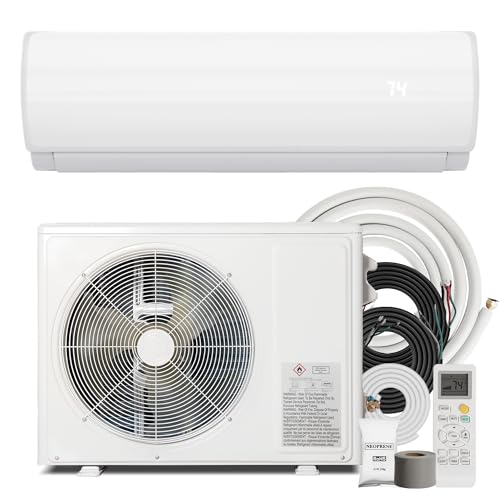
Designed for strong year-round performance, Nexaro’s 12,000 BTU unit uses an inverter compressor and a robust heat pump to cool and heat spaces up to 750 sq. ft. It emphasizes energy savings and includes several operating modes, like Auto, Sleep, Eco, and Turbo Boost. It also uses R32 refrigerant to lower environmental impact. Limitation: refrigerant service and local availability for refills should be considered.
Who it’s best for: Homes needing flexible climate control with multiple modes and an emphasis on eco-friendly refrigerants.
COSTWAY 12000BTU Mini Split Air Conditioner & Heater

This COSTWAY unit emphasizes quiet operation and a full suite of modes for all-year comfort. It offers five operating modes (auto, cool, dry, heat, fan) plus four fan speeds, sleep and eco options, and a timer. The inverter-based design helps reduce cycling and energy use. A caution: the remote and display features are designed for comfortable use, but installation clarity is essential for optimal performance.
Who it’s best for: Buyers seeking a balance of performance, quiet operation, and all-year versatility in a mid-sized space.
Albott 24,000 BTU Mini Split Air Conditioner & Heater
Best for larger homes or open-plan spaces, this Albott model delivers higher cooling/heating capacity with SEER2 18 efficiency. It provides comprehensive comfort features, including a sleep timer and remote/app control. It covers up to around 1550 sq. ft. and operates in a wide temperature range. Limitation: larger footprint means outdoor space and wall mounting requirements are greater, which can affect installation complexity.
Who it’s best for: Homeowners with big living areas or open floor plans needing robust, energy-efficient climate control.
ROVSUN 11500 BTU WiFi Mini Split

ROVSUN offers a Wi-Fi-enabled unit with 11,500 BTU capacity suitable for spaces up to 750 sq. ft. It combines a heat pump with inverter technology and features like automatic defrost, timer, sleep mode, Eco mode, and voice/app control compatibility. Best for tech-forward homes seeking smart integration. Limitation: keep firmware and app compatibility in mind if you rely on voice assistants.
Who it’s best for: Tech-savvy buyers who want remote control and smart home integration for zone cooling and heating.
Buying Guide: Key Considerations For Whole-House Split Systems
- Room sizing and zoning: Match BTU capacity to room size and plan for multiple zones if you have an open floor plan or separate living spaces.
- Energy efficiency: Look for SEER2 ratings and inverter technology to reduce ongoing energy costs and improve performance in extreme temperatures.
- Installation requirements: Ductless mini splits require an outdoor unit and wall-mounted indoor units with proper line-set routing; professional installation is often recommended.
- refrigerant and environmental impact: R32 or similar low-GWP refrigerants are common—consider availability for service and refills.
- Connectivity and control: If smart home integration matters, prioritize units with APP control and compatibility with voice assistants.
- Maintenance features: Self-cleaning, dehumidification modes, and filter access affect long-term upkeep and indoor air quality.
- Noise levels: Inverter-driven systems usually run quietly; verify decibel ratings for bedrooms or study areas.
How to choose between the options
- For single large rooms: A 12,000 BTU or similar unit from Albott, Nexaro, or COSTWAY can offer robust cooling and heating with energy efficiency.
- For bigger homes or open-plan spaces: Consider 24,000 BTU models or multiple paired units to cover more area effectively, such as Albott’s larger option.
- For tech enthusiasts or smart homes: ROVSUN’s WiFi-enabled unit offers convenient remote access and automation.
- For budget-conscious setups: Compare models that balance cost with energy savings and features like Eco mode and auto modes.
FAQ
- What is a whole-house split air conditioner? Answer: It’s a ductless system with an outdoor condenser and indoor air handlers placed in multiple zones, allowing independent climate control per area.
- Do mini splits require ductwork? Answer: No, they are ductless and install via wall-mounted indoor units connected to an outdoor condenser.
- Is 19 SEER2 better than 18 SEER2? Answer: Higher SEER2 typically indicates greater energy efficiency, particularly in long-term operation.
- Can these units operate in very cold temperatures? Answer: Many models specify operation in low-temperature ranges (as low as 5°F), but performance can vary by model.
- Will these units cool a multi-room house effectively? Answer: They can, especially when configured with multiple zones and appropriately sized units for each area.
- Do I need professional installation? Answer: For optimal performance and warranty considerations, installation by a qualified technician is recommended.