Finding the right cooling option depends on your space, noise tolerance, and whether you prefer a window or a standalone tower design. This guide highlights five top picks that balance power, noise, and features for American homes. It helps buyers decide who benefits most from window fans and who should choose tower fans. The selected products offer clear advantages for bedrooms, offices, and living areas while noting practical limitations.
Quick comparison table of chosen products
| Product | Best For | Key Benefit | Limitation |
|---|---|---|---|
| Bionaire Window Fan | Rooms with window access | Reversible airflow for intake/exhaust | Requires window space |
| Vornado Window Fan | Whole-room airflow | 4 speeds; reversible exhaust | Basic setup, no smart features |
| DREO Tower Fan | Quiet bedrooms or offices | Upgraded DC motor; 20dB Sleep mode | Higher price point |
| DREO Tower Fan (Second Model) | Larger rooms or living spaces | 26 ft/s airspeed; 33 ft reach | Only 28dB rating in specific mode |
| Levoit Bladeless Tower Fan | Quiet, portable cooling | 20dB, bladeless design, portable | Lower max speed |
DREO Tower Fan for Bedroom with Upgraded DC Motor

This tower fan is designed for quiet, powerful air delivery in bedrooms and offices. Its upgraded DC motor combines with TurboWind technology to reach speeds up to 28 ft/s and project air up to 34 ft. It features 8 speeds and 4 modes (Normal, Natural, Sleep, Auto) for versatile comfort. The Sleep mode and 20 dB night-time operation make it well suited for light sleepers and late-night work sessions. Best for: small to medium bedrooms, home offices where quiet operation matters; choose this if you want strong airflow with minimal noise. Caution: taller setups or larger rooms may benefit from higher reach models when corners are far from the unit.
DREO Tower Fan for Bedroom, 90° Oscillation

This model emphasizes broad room coverage with 26 ft/s air speed and 90° oscillation, delivering airflow across larger living spaces. It also clocks in at 28 dB in quiet operation modes, making it a strong candidate for bedrooms and light offices. Best for: larger bedrooms, living rooms, or open-plan spaces; better for evenly distributing air across a wider area. Limitation: higher airflow settings may produce noticeably more noise than ultra-quiet modes in some environments.
Levoit Bladeless Tower Fan

Levoit’s bladeless design reduces visual distraction while maintaining solid airflow. It offers quiet performance with a focus on portability and ease of use, suitable for desks or small rooms. Best for: desks, small bedrooms, and home offices where low noise and portability are priorities. Limitation: maximum airspeed is generally lower than some high-power tower models, so not ideal for very hot, large spaces.
Bionaire Window Fan with Reversible Airflow

This window fan provides versatile airflow with reversible blades for intake and exhaust, ideal when you want to move air between indoors and outdoors. Best for: rooms with easy window access and when you want to switch between cooling and ventilation modes. Caution: installation requires window space and sealing; may not suit rooms without adjacent openings.
Vornado Window Fan with Reversible Exhaust
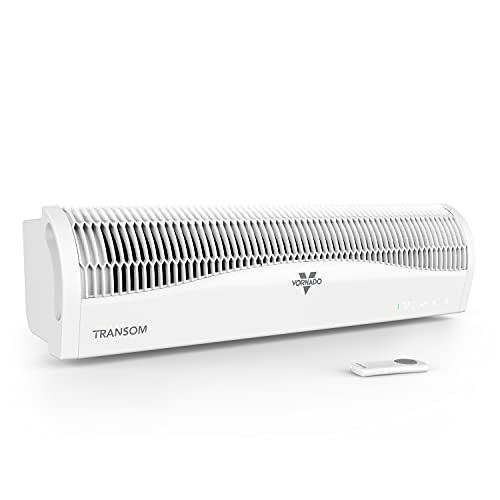
Vornado emphasizes powerful, adjustable airflow with 4 speeds and a reversible exhaust mode for flexible ventilation. Best for: users who want a simple, durable window unit with dependable airflow distribution. Limitation: not designed as a bladeless or ultra-quiet device; best used when external noise is tolerable and you have window access to place and seal the unit effectively.
Buying Guide: Window Fans vs Tower Fans
- Space and placement: Window fans require window access and sealing; tower fans fit indoors without external openings. Choose window fans if you want natural ventilation by drawing in outdoor air, or if your window is strategically placed for cross-breeze cooling.
- Noise and comfort: If you sleep or work near the unit, prioritize models with low decibel levels—many modern towers offer 20–28 dB modes. For extremely quiet environments, bladeless or advanced DC-motor tower fans can minimize disruption.
- Airflow direction and coverage: Window fans can pull in fresh air or exhaust stale air across entire rooms; tower fans typically provide targeted, evenly distributed airflow with oscillation. Larger rooms may benefit from tower fans with wide oscillation and higher speed settings.
- Energy efficiency: DC motors generally consume less power and produce less heat in idle states. Look for energy-saving modes like Sleep or timer features to tailor usage.
- Control options: Remote controls and touch interfaces enhance convenience. If you want intelligent adjustments, check for auto mode, temperature sensing, or programmable timers.
- Maintenance and durability: Window fans can simplify maintenance with straightforward cleaning but require window setup. Tower fans tend to be more compact and easier to move, but some models may have fewer adjustments in certain budget ranges.
Frequently Asked Questions
- Which is better for cooling a large room, window or tower fans? Tower fans with wide oscillation and higher airspeeds typically provide more uniform coverage in larger spaces, but a well-placed window fan can efficiently exchange indoor and outdoor air for rapid cooling.
- Are bladeless fans quieter than traditional tower fans? Yes, bladeless designs often deliver smoother airflow with lower perceived noise, though performance varies by model and speed setting.
- Can window fans save energy in summer? They can reduce air conditioning use by enabling natural cooling and ventilation, especially when outdoor conditions are favorable.
- Do tower fans work well in small apartments? Yes, compact tower fans with low noise and remote control are ideal for desks, bedrooms, and studio spaces where space is at a premium.
- What should I consider when choosing between these options? Consider window access, room size, noise tolerance, and whether you need intake, exhaust, or both airflow directions.
- Is it important to have a timer on these fans? A timer helps automate cooling and reduces energy use during sleep or work hours, contributing to overall comfort and efficiency.