For wine lovers and collectors, maintaining stable temperature and humidity is essential. The top five products below are suited for different buyers—from traditional analog enthusiasts to tech-savvy modernizers. If you store wine long-term, aim for devices that combine accurate readings with reliable build quality and simple monitoring. The table lists each option at a glance to help compare capabilities quickly.
| Product | Brand | Best For | Key Strength |
|---|---|---|---|
| Wine Cellar Hygrometer & Thermometer 1225HT | Fischer Germany | Traditional cellars | Real hair hygrometer with brass dial |
| SMARTRO SC42 Professional Digital Hygrometer | SMARTRO | High accuracy monitoring | Swiss sensors, 10-second updates |
| Govee Indoor Hygrometer Thermometer H5075 | Govee | Smart home integration | Bluetooth with clear display |
| Govee Smart Thermometer Hygrometer (WiFi) | Govee | Remote monitoring | WiFi + Bluetooth with alerts |
| YoLink Smart Temp & Humidity Sensor | YoLink | LoRa long-range monitoring | Very long battery life |
Wine Cellar Hygrometer & Thermometer 1225HT

The Fischer 1225HTv2 combines a real hair hygrometer with a bimetal thermometer for traditional wine cellar use. Handcrafted in Germany with a diamond polished brass frame and ivory dial, it suits classic, wood-paneled cellars. Best for: collectors who prefer analog-style, time-tested instrumentation. Caution: readings may lag slightly with rapid temperature changes, as with most hair-based hygrometers.
SMARTRO SC42 Digital Hygrometer
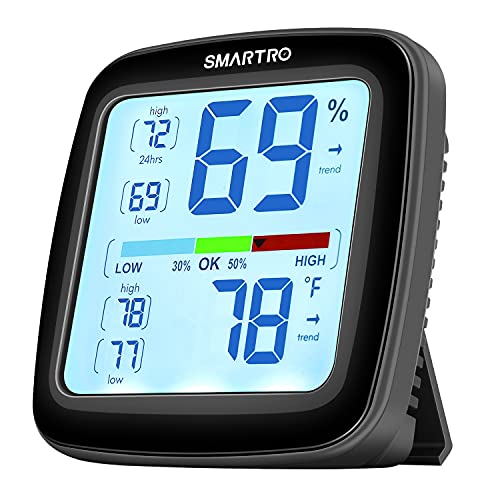
SMARTRO SC42 uses Swiss sensors for high accuracy with readings updated every 10 seconds. It offers a large backlit display and 24-hour and all-time max/min records, making it ideal for tech-enabled cellars or areas where quick trend detection matters. Best for: homes needing precise, frequent updates and easy visibility. Caution: backlight is momentary; continuous lighting is not always on unless actively used.
Govee Ind. Hygrometer H5075

Govee H5075 pairs a 3-inch bright display with a Swiss-made sensor for reliable temperature and humidity readings. It supports Bluetooth with app-based monitoring and a live history log. Best for: small to medium cellars or rooms where wireless monitoring from a mobile device is preferred. Limitation: Bluetooth range can be limited, typically around 164 feet in open space.
Govee Smart Thermometer Hygrometer (WiFi)

This device uses both WiFi and Bluetooth for remote monitoring, with alerts that can be configured in-app. It provides precise readings (±0.54°F temperature; ±3% RH humidity) and supports data export. Best for: cellars requiring remote, always-on monitoring and integration with home networks. Caution: 5G networks are not supported; requires 2.4 GHz WiFi for full functionality.
YoLink Smart Temp & Humidity Sensor

YoLink offers long-range LoRa sensors with multi-environment monitoring and a two-year battery life. It supports an Ethernet or 2.4 GHz WiFi hub and integrates with Alexa and IFTTT. Best for: larger properties or basements where long-range wireless coverage is needed. Limitation: not designed for outdoor use; ensure proper indoor placement.
Buying Guide
What should you consider when choosing a wine cellar thermometer hygrometer?
- Measurement type: Analog (hair hygrometer) vs. digital. Analog often suits traditional cellars; digital provides quick, precise data and easy reading.
- Accuracy and range: Look for temperature accuracy within about ±0.5°F and humidity within ±3% RH for wine storage.
- Display and alerts: A clear display and configurable alerts help catch deviations early. Backlit displays are useful in dim cellars.
- Connectivity: Bluetooth for local monitoring; WiFi or LoRa for remote monitoring and longer range. Decide which fits your setup.
- Power and installation: Battery life for wireless models; wall-mount or freestanding designs for easy placement in racks or cabinetry.
- Durability: Choose models with sturdy housings and, if possible, materials appropriate for wine cellars (moisture resistance, stable mounting).
How to place sensors for best results
Install sensors away from direct light, heat sources, and door drafts. Place the sensor in the middle of the wine rack area to reflect the cellar’s typical conditions. For larger collections, consider multiple sensors to monitor variations between zones.
What is the right monitoring approach for your cellar?
For traditional cellars, analog hygrometers can be visually appealing and reliable. For modern spaces or multi-room setups, digital and connected devices offer real-time data, remote monitoring, and alerts that help maintain optimal conditions consistently.
Maintenance and calibration tips
Calibrate digital sensors according to manufacturer instructions to maintain accuracy. Replace batteries as recommended to prevent data gaps. Periodically check analog devices for drift due to humidity changes or aging components.
FAQ
- What is the most important reading to monitor for wine storage? Temperature stability is critical; aim for a steady range that prevents rapid fluctuations which can stress the wine.
- Do I need a digital hygrometer if I already have an analog one? Digital devices offer quick updates, data logging, and alerts, which are helpful for early deviation detection.
- Is Bluetooth enough for cellar monitoring? Bluetooth works well for single-room setups, but WiFi or LoRa options provide remote monitoring and broader coverage.
- Can I use multiple sensors in my wine cellar? Yes, multiple sensors help identify temperature or humidity differences between zones or racks.
- What should I do if humidity is consistently high? Investigate for moisture sources, ensure proper ventilation, and consider a dehumidifier if necessary to keep RH within ideal ranges.
- Are analog hygrometers accurate enough for long-term storage? They can be accurate, but readings may drift over time; periodic calibration helps maintain reliability.