A heat pump can provide both heating and cooling, while a conventional cooling-only air conditioner needs another system to heat the home. In daily use, the important differences include the thermostat setup, cold-weather operation, backup heat, and the way the complete system was designed.
Do not identify equipment only by the outdoor cabinet's appearance. Start with the model information and homeowner manual, because two similar-looking units can belong to different heating arrangements.
Understand the shared cooling job
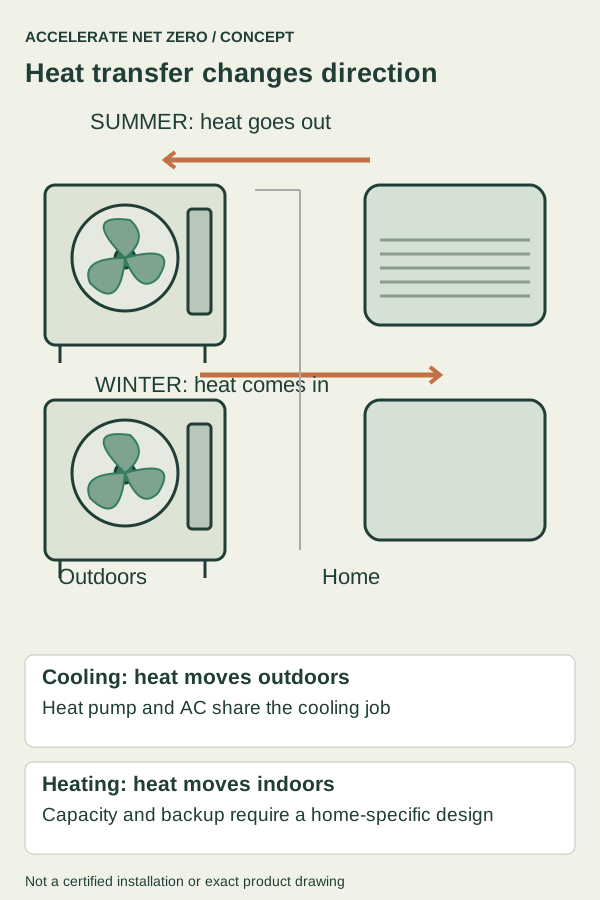
In cooling mode, an air-source heat pump moves heat from indoors to outdoors, much like a central air conditioner. ENERGY STAR describes the heat pump's additional role as reversing the heat-transfer direction to heat the home when required.
That shared cooling function does not mean every system offers the same comfort or moisture performance. Equipment selection, installation, controls, airflow, and the home itself remain relevant, so a product category alone cannot establish how your rooms will feel.
Ask which indoor and outdoor components form the proposed matched system. A quotation that names only the outdoor unit leaves you without a complete picture of the air handler or furnace, coil, thermostat, and other parts involved in its actual operation.
If you are comparing replacements, keep the cooling requirement separate from the heating requirement. A unit chosen to resemble the old cabinet's size may miss changes to the home, and an existing installation is not proof that its original capacity was correct.
Find out what provides heat now
Look at the equipment records to establish whether you have a furnace, electric resistance heat, a heat pump, or a combination. If you cannot identify the arrangement from normal labels and documentation, ask a professional rather than opening equipment compartments to trace wires or fuel lines.
The heating source matters because replacing a cooling-only air conditioner can leave the heating system largely separate, while installing a heat pump may change how the two functions are coordinated. A dual-fuel arrangement adds another layer of control that must be designed for the equipment and local conditions.
Write down what the contractor means by “backup,” “auxiliary,” and “emergency” heat in the proposed system. Those terms should have specific meanings for your installation rather than serving as interchangeable descriptions in a sales conversation.
Ask who will configure and explain the thermostat after installation, including any automatic changeover or equipment staging. You should leave with operating instructions for your actual system, not a general internet rule about every heat pump.
Expect the controls to deserve attention
A heat pump thermostat must support the equipment and its control arrangement, which can differ from a conventional furnace-and-AC setup. Before buying a smart thermostat, confirm the exact system, wiring, stages, accessories, and required functions using the manufacturer's compatibility process.
Do not assume that a wire color establishes its function or that a matching number of terminals proves compatibility. A professional may need to inspect the equipment side, especially with proprietary communicating controls or a dual-fuel system.
Ask how the installer recommends using schedules and setbacks for the proposed equipment. General advice can overlook backup-heat controls, recovery behavior, climate, and the household's comfort needs, so use the system-specific guidance as your starting point.
Also ask what each normal screen indicator means. Understanding whether the display is requesting heat, showing a fan setting, or reporting an equipment error helps you describe an issue without repeatedly changing settings in response to an unfamiliar symbol.
Discuss cold-weather performance explicitly
A heat pump's ability to serve the home in cold weather is a design question tied to the model and heating load. Ask for the equipment's documented capacity at relevant outdoor conditions and how the proposed system handles periods when additional heat is required.
Avoid reducing that discussion to a single lowest advertised operating temperature. Being able to run at a temperature is different from supplying the amount of heat your particular home needs there, and the electrical requirements also belong in the proposal.
If backup heat is included, ask when it operates, how it is controlled, and which parts are included in the price. You need that explanation before comparing operating-cost estimates, because a model number alone does not reveal the home's future mix of heating sources.
Do not use a generic savings percentage as a prediction for your bills. The comparison depends on your present equipment, energy prices, weather, home characteristics, and system operation, all of which deserve stated assumptions in an estimate.
Know the outdoor unit's normal owner checks
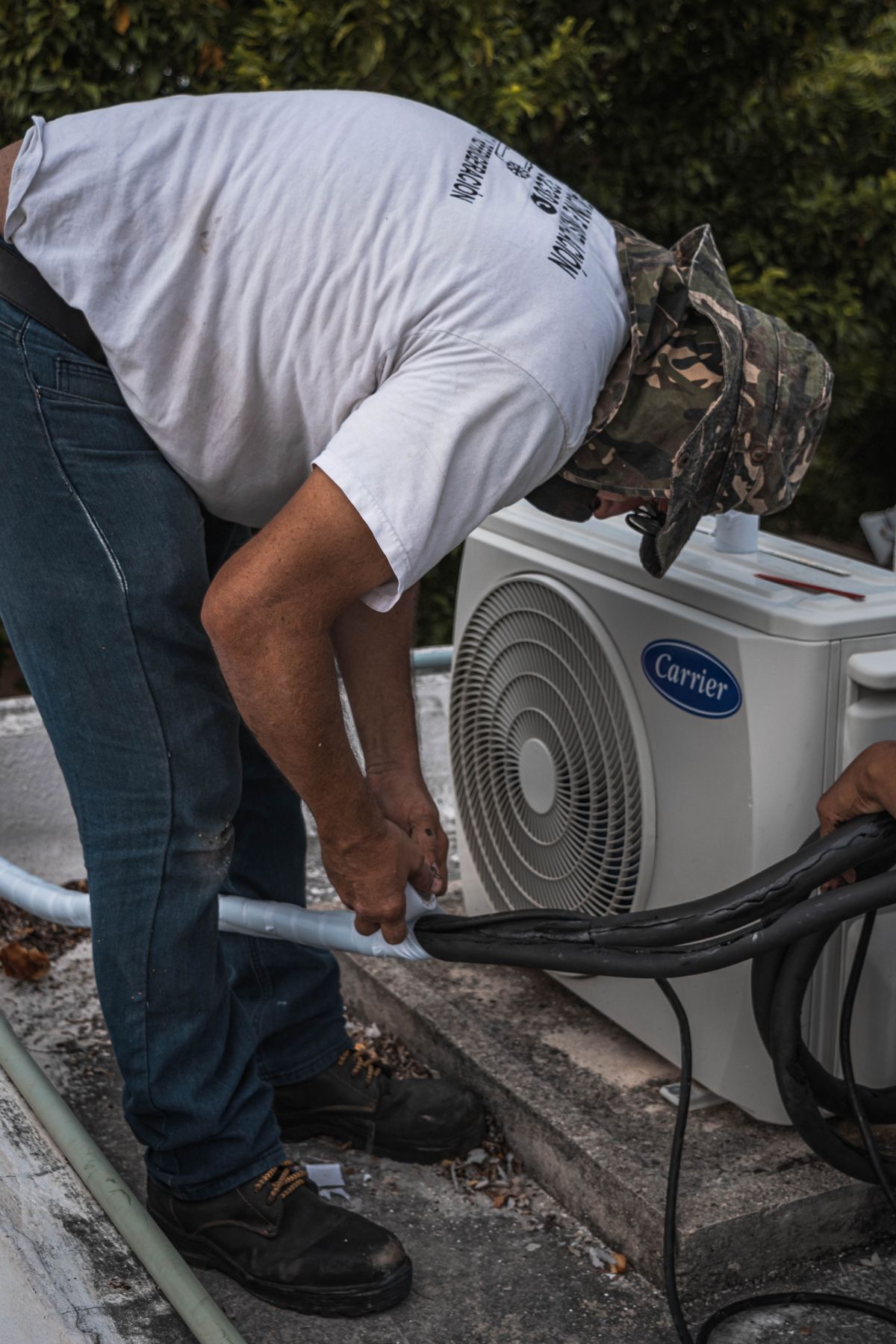
Read the manual for the clear space required around the outdoor equipment and keep ordinary storage from obstructing it. Do not build an enclosure or add a decorative cover based only on appearance, because airflow and service access are part of the equipment's design.
Ask the installer what seasonal behavior is normal for the exact model, including any defrost operation and the sounds you may hear. A clear explanation can keep you from treating every unfamiliar cold-weather event as a failure, while still telling you which observations require service.
Never chip at coils, open electrical panels, add refrigerant, or override equipment protections as a homeowner experiment. If the unit appears damaged, repeatedly faults, or behaves outside the instructions, report the condition and use qualified service.
Keep the equipment model, installation documents, and service contact accessible. A photograph taken from a safe normal position can help you describe an issue, but it should not require reaching into moving equipment or standing in an unsafe outdoor location.
Compare the daily routine you would actually use
Imagine your existing home uses a furnace for winter heat and a separate central air conditioner for summer. A cooling-only replacement may preserve that broad routine, while a heat-pump proposal could use the outdoor equipment during heating weather as well.
You would want to know how the existing furnace integrates, which thermostat is included, and whether any electrical or distribution work is needed. Those questions matter more to your daily experience than a label saying one option is “future ready.”
In a home without existing ducts, a ductless proposal brings a different room-control and equipment-layout discussion. Ask which rooms each indoor unit serves and how doors, room use, and the intended heating coverage enter the design.
Neither example identifies a universal winner. You are comparing complete supported arrangements for your home, including installation and service, rather than deciding that all heat pumps or all conventional air conditioners behave the same way.
Ask for a practical handover
Request the final model numbers, control settings explained in homeowner terms, maintenance instructions, and the commissioning documentation included in the contract. If there are filters in several locations, have the installer show you each approved owner-maintenance task.
Ask how to describe a service problem: which display information to record, what normal shutdown procedure applies, and who to contact. Keep any emergency guidance separate so an urgent safety issue does not get treated as an ordinary scheduling question.
After installation, observe comfort in the rooms you discussed during quoting and report persistent differences. A new system reaching the hallway setpoint does not by itself prove that the room-specific concern in your original brief has been addressed.
Keep your first bill comparisons cautious because weather, billing days, rates, and household use can change. The useful result is a comfortable, properly documented system whose behavior you understand, with operating costs evaluated using evidence rather than a promised universal saving.
If different family members use the controls, leave a short shared note explaining the agreed heating and cooling routine. That prevents one person from unknowingly undoing a system-specific setting while another is trying to understand the equipment's normal daily behavior in a new season.
Sources & further reading
- ENERGY STAR: Air-Source Heat Pumps — Heating and cooling heat-transfer direction; proper sizing and Manual J.
Sources checked October 24, 2026. Product details can change; confirm the exact model and listing before purchase.