SEER2 describes seasonal cooling efficiency under a specified rating procedure, while HSPF2 describes seasonal heating efficiency for heat pumps. Use them to compare documented equipment combinations on the same basis, then examine capacity, climate, installation, controls, and cost separately.
Neither number predicts your exact utility bill or proves that a system fits your home. A high rating can be useful information while leaving the most important installation and comfort questions unanswered.
Keep the name attached to the number
Write SEER2, HSPF2, or EER2 exactly as shown instead of shortening all of them to “efficiency.” The labels identify different metrics, so two large-looking numbers may not describe the same function or testing basis.
AHRI explains that the move to the newer “2” metrics involved substantial changes in the test procedure. Avoid comparing an old SEER value directly with a SEER2 value as though the two came from an unchanged test.
If a quote mixes old and new labels, ask for consistent current documentation for the exact proposed combination. Do not apply an informal universal conversion factor to every product or let a sales chart hide which metric each column uses.
Keep capacity beside efficiency in a separate column. The amount of heating or cooling a system can deliver and the efficiency with which it does so are different questions, so a higher rating does not automatically mean more heating output.
Check the complete matched system
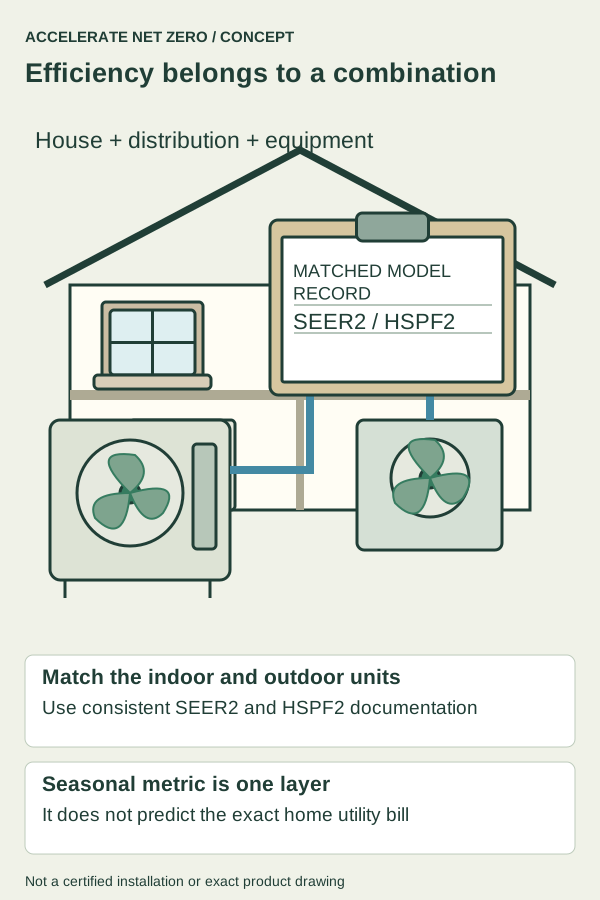
For a split system, the documented rating depends on the specified indoor and outdoor combination. AHRI advises asking for the certificate or reference number that identifies the match, rather than relying on the outdoor cabinet's product-family headline.
Record the outdoor unit, indoor coil or air handler, furnace where applicable, and any configuration details shown on the rating record. If the installer changes a component before installation, ask whether the documented combination and performance record also change.
A manufacturer may advertise a range for a product family that includes several sizes and combinations. “Up to” the highest family rating does not establish the rating for the exact size and indoor equipment on your quote.
If the proposal provides only a series name, leave the rating unresolved in your comparison until the actual models are specified. Filling that gap with the best number from a brochure would make the quotation appear more complete than it is.

Understand what a seasonal metric compresses
A seasonal rating summarizes performance using defined conditions and calculations. That standardized basis helps comparison, but it cannot reproduce every home's weather, duct arrangement, occupancy, thermostat use, and maintenance condition.
For cooling, ask whether the system's capacity and operating range fit the home's load as well as how the seasonal efficiency compares. A unit that is poorly sized or installed is not made suitable merely by having an appealing SEER2 value.
For heat-pump heating, ask about capacity and performance at outdoor conditions relevant to your home. HSPF2 is a useful seasonal metric, but it does not by itself tell you whether the unit supplies the required heat on your local design day.
If backup heat is part of the system, ask how it enters the proposed operating strategy and any cost estimate. Your future energy use depends on the complete arrangement rather than an isolated heat-pump rating viewed without its controls and additional heat source.
Do not turn a rating ratio into a bill promise
It can be tempting to divide two efficiency numbers and call the result your savings percentage. That shortcut leaves out the existing system's actual condition, the home's load, weather, distribution losses, control behavior, energy prices, and other household uses on the bill.
Ask anyone providing a savings estimate to state the baseline and assumptions clearly. An estimate comparing a new heat pump with electric resistance heating answers a different question from one comparing it with a particular gas furnace and cooling system.
Also separate energy use from energy cost. Fuel and electricity rates can differ, and fixed utility charges may remain even when a system uses fewer units of energy during the season.
Keep your decision grounded in an installed-system proposal and a transparent estimate if operating cost matters. You can value efficiency without claiming an exact household payback that the available evidence cannot support.
Read climate and capacity as a second layer
Ask the contractor which outdoor heating and cooling design conditions were used for your home. The answer helps connect the equipment data to a real load calculation rather than treating the seasonal rating as the entire design process.
For cold-weather heat-pump proposals, request the documented heating capacity at relevant conditions and the backup arrangement. Avoid using only the lowest advertised operating temperature, since continuing to run and meeting the home's heating requirement are not the same thing.
For a home with a difficult summer moisture complaint, discuss the system's sizing, controls, airflow, and ventilation strategy. A SEER2 comparison alone does not establish how the installed system will manage the room conditions you care about.
If the home has unusual distribution or room-use challenges, put them in the design brief. A quiet bedroom, a closed office, and a frequently used addition can deserve specific attention that a whole-system seasonal metric cannot describe.
Compare two proposals with a clear boundary
Imagine Quote A and Quote B both identify matched combinations and use SEER2 and HSPF2 consistently. Quote B has higher seasonal ratings, but its distribution work and backup controls remain unspecified.
You can record the rating advantage while still asking for the missing scope before choosing. The higher numbers do not answer whether the ductwork fits, the rooms receive appropriate airflow, or the proposed controls support the intended heating arrangement.
Now imagine Quote A uses an older SEER brochure while Quote B provides an exact SEER2 certificate. You do not yet have a fair numeric comparison, so request consistent documentation instead of making a ranking from mismatched labels.
Keep installed cost, documented performance, capacity rationale, warranty, service, and installation checks visible as separate decision fields. That prevents one attractive number from silently standing in for everything you need the system to do.
Verify product and program claims separately
A rating record, an ENERGY STAR qualification, and an incentive eligibility decision serve related but different purposes. If a rebate or other program affects your choice, verify its current requirements for the exact equipment, location, installation date, and application process.
Do not assume a general efficiency claim guarantees a tax benefit or utility payment. Programs can change, and a contractor's estimate should distinguish the actual installed price from financial assistance that still needs separate eligibility confirmation.
Likewise, local installation and code requirements are not established by a consumer efficiency comparison. Ask the responsible installer to confirm applicable requirements and permits for the complete system rather than trying to certify compliance from a number on a package.
Keep the final certificates and model numbers with the installation documents. If a future service or program question arises, those records identify what was installed more reliably than a screenshot of a product family's promotional page.
Use the ratings for the job they do well
Start with consistent metrics and exact matched combinations, then ask how each proposal meets your home's heating, cooling, room comfort, and maintenance needs. This keeps the comparison useful without asking a seasonal number to answer questions outside its scope.
After installation, evaluate comfort directly and compare energy use with appropriate attention to weather, billing days, rates, and occupancy. A successful choice is supported by both sound design and understandable operation, with ratings contributing evidence rather than replacing it.
When a quote is revised, compare the model list and certificate again instead of checking only the price change. A substituted indoor component can change the combination you originally evaluated, so ask for the final documentation to describe the equipment that will actually arrive.
Sources & further reading
- AHRI: Efficiency Metrics and Test Procedures — SEER2/HSPF2 reflect changed rating procedures; do not compare unlike metrics as identical.
- AHRI: Air-Conditioning and Heat Pump Efficiency — Matched indoor/outdoor combinations and certificate/reference-number check.
Sources checked October 24, 2026. Product details can change; confirm the exact model and listing before purchase.