If your house feels cool and sticky at the same time, lowering the thermostat again may not solve the part that is bothering you. Start by measuring room humidity and looking for the pattern, then separate simple moisture sources from a cooling-system problem.
You are collecting clues, not diagnosing refrigerant charge or choosing a replacement unit from a single number. A short, consistent log gives you a better starting point and gives an HVAC professional something useful to investigate if the easy checks do not resolve it.
Confirm what you are feeling
Place an indoor hygrometer where you spend time, away from a direct supply-air stream, sunlight, and a steamy kitchen or bathroom corner. Let it settle according to its instructions before recording the temperature and relative humidity together.
Write down the time, weather, thermostat setting, and whether the air conditioner is running. Record another reading later in the same place so you are comparing a room’s pattern rather than comparing unrelated spots.
EPA guidance recommends keeping indoor relative humidity below 60 percent, ideally around 30 to 50 percent when possible. Treat that as a moisture-control guide, while remembering that a basic consumer sensor has a tolerance and one reading does not tell you the cause.
If your display reads 58 percent once and 61 percent a few minutes later, do not turn that small change into a precise verdict. Look for repeated elevated readings, visible dampness, and the circumstances that accompany them.
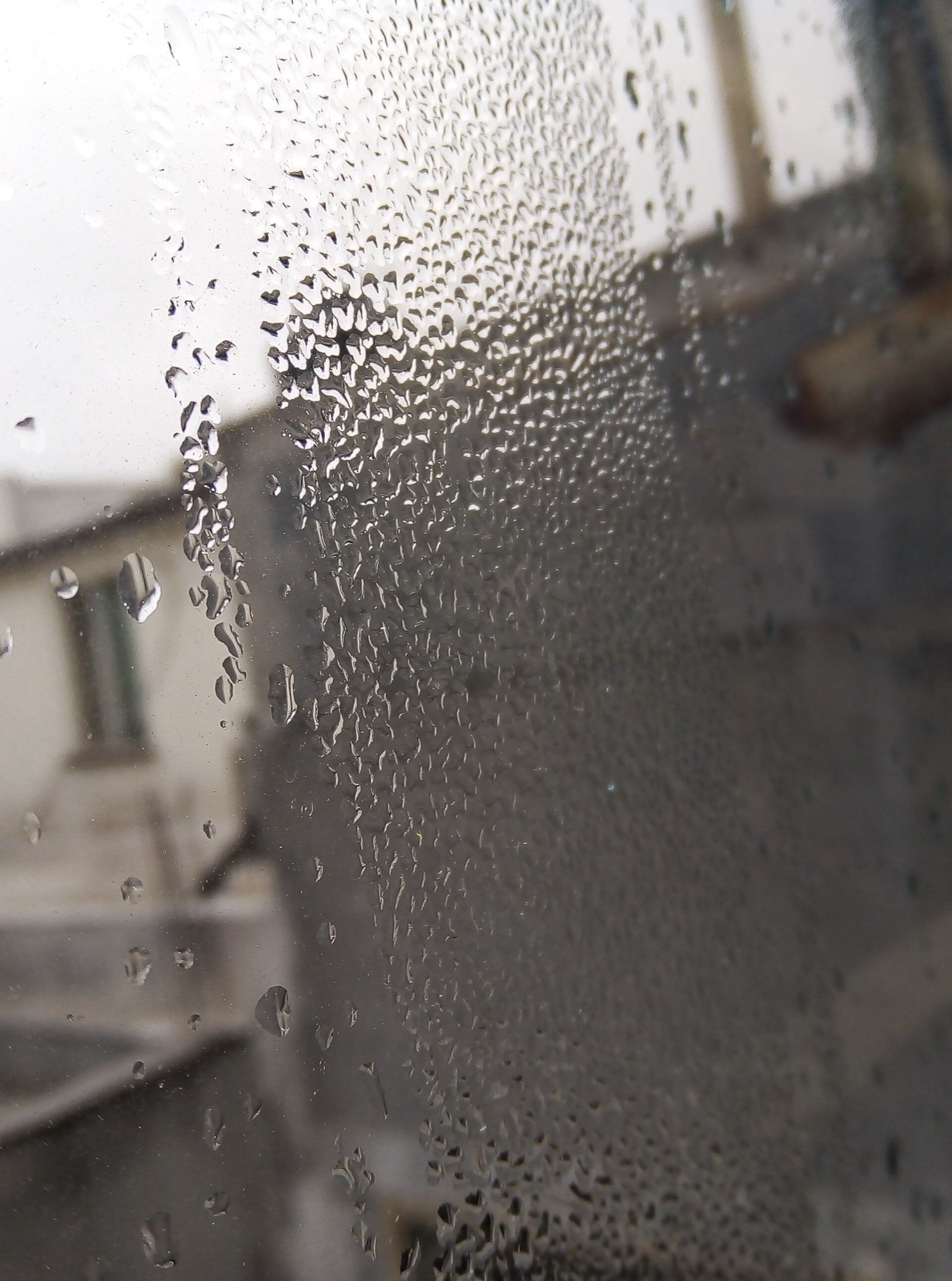

Understand why cool air can still feel damp
An air conditioner has to handle heat and moisture, and those are related but different jobs. Cold supply air tells you something about cooling, but it does not prove that moisture is leaving the whole house as intended.
Relative humidity also depends on temperature, so keep the temperature reading beside the percentage. A changing percentage can reflect a temperature change as well as a change in the water vapor in the air.
Your useful home check is the overall experience: does the house reach the setpoint quickly and then stay sticky, or does it struggle to cool while humidity remains high? Those two descriptions point a service visit toward different questions, even though neither is a diagnosis by itself.
Keep your comfortable usual setting during the observation period unless your household needs a change. Repeatedly changing settings makes it harder to connect a reading to the way the system actually ran.
Look for moisture you are adding indoors
Notice whether readings rise after showers, cooking, or drying laundry. Use functioning bathroom exhaust and an externally vented kitchen exhaust as intended, and check that a clothes dryer is vented and maintained according to its instructions.
A fan that only recirculates kitchen air is different from an exhaust that carries moisture outdoors. Find out which one you have before assuming that switching on a fan removes the water vapor from cooking.
Check accessible areas around sinks, appliances, windows, and ceilings for a leak or damp material. If you find active water, address the source promptly instead of waiting to see whether the air conditioner can dry it out.
EPA advises drying wet materials within 24 to 48 hours after a leak or spill to help prevent mold growth. A recurring wet patch, musty smell, or visible growth calls for moisture investigation rather than simply covering the odor with a room product.

Check doors, windows, and outdoor-air habits
Think about what changed before the house began feeling humid. Open windows, a frequently used patio door, or a newly noticed gap can bring outdoor moisture into a cooled space during humid weather.
Opening a window is useful for drying only when the outdoor conditions support that goal. A pleasant breeze can still carry substantial moisture, so the fact that outside feels cooler does not establish that it will dry your home.
Avoid using outdoor and indoor relative-humidity percentages alone to compare moisture when the temperatures differ substantially. Record the weather and, when available, outdoor dew point for the professional reviewing your log rather than assuming the smaller percentage always means drier air.
Keep required ventilation operating as designed. If you suspect a whole-house ventilation setting or air leak, ask for a system-specific check rather than blocking vents or sealing an intentional air path on your own.
Review the normal thermostat controls
On many central systems, the fan setting offers Auto and On. Continuous blower operation can allow moisture remaining on the cooling coil to return to the air after the compressor stops, which is one reason to review that setting in a humid climate.
DOE and Building America guidance discuss using Auto for central air-conditioning fan operation. Check your equipment’s instructions and any ventilation requirements before changing a special control sequence, and leave installer settings and internal relays to your technician.
Do not assume an Auto button means the same thing on every appliance. A room unit may use that label for fan-speed selection, while a central thermostat may use it for when the blower runs.
If your system includes a dehumidification setting, look up the exact model’s operating instructions. You want to understand what that control does before moving several sliders and losing your starting point.
Notice short cycles without declaring the equipment oversized
Watch whether cooling stops soon after starting, especially when the room reaches its temperature setting but still feels damp. ENERGY STAR explains that an oversized room air conditioner can cool a room before it has time to remove enough moisture.
That is a useful possibility to discuss, not proof that your central system is too large. Control issues, operating conditions, moisture entry, and other equipment problems can produce confusing symptoms that require a fuller assessment.
Record approximate start and stop times if you can observe them safely. Add whether the pattern happens all day or mainly during mild, humid weather, when a house may need moisture control without a large cooling load.
If you recently replaced equipment, have the model numbers and installation paperwork ready. Ask the contractor to review sizing, airflow, control setup, and moisture management together rather than requesting a smaller unit based only on a website article.
Do the accessible maintenance checks
Inspect the user-serviceable filter and maintain it as the manufacturer directs. Use the specified type and size instead of assuming a more restrictive filter is automatically a better choice for your system.
Keep furniture and stored items away from supply and return openings. If a room remains uncomfortable, document that location rather than closing several other registers to force air toward it.
Look for obvious water around the indoor unit without opening electrical compartments or reaching into equipment. EPA’s moisture guidance calls for keeping air-conditioning drip pans and drain lines unobstructed, but the safe maintenance procedure depends on your installation.
If you see ice, overflowing water, damaged wiring, or another abnormal condition, follow the equipment’s shutdown guidance and arrange qualified service. Do not chip ice, bypass a safety switch, or pour an improvised chemical into an unfamiliar drain arrangement.
Decide whether to monitor, fix a source, or call
If humidity spikes after a known activity and falls again with proper exhaust use, keep recording the pattern while improving that routine. If the whole home stays damp despite ordinary moisture control, move toward an HVAC and building-moisture assessment.
A standalone dehumidifier may be useful in some homes, particularly when cooling demand is low. Choose and operate it for the actual space and drainage arrangement, while still fixing leaks or other moisture sources it cannot repair.
If you suspect mold contamination in the HVAC system, EPA advises against running that system until the concern is evaluated appropriately. Follow qualified guidance instead of trying to clean hidden parts through a register.
Bring your room readings, activity notes, fan setting, cycle observations, and photographs of any water to the service visit. Those details help turn “the house feels clammy” into a specific conversation about comfort, moisture, and the next check that will resolve the uncertainty.
Sources & further reading
- EPA: A Brief Guide to Mold, Moisture and Your Home — Humidity guidance; drying wet materials; exhaust and drainage; suspected HVAC contamination
- ENERGY STAR: Room Air Conditioners — Oversized room AC can cool before sufficient moisture removal; do not generalize as a diagnosis
- Building America Solution Center: Air Conditioning — Central blower Auto; re-evaporation concern; dehumidification in low cooling-load seasons
Sources checked October 23, 2026. Product details can change; confirm the exact model and listing before purchase.