Before calling an HVAC technician, write a short description of the symptom, when it happens, and which parts of the home it affects. Add the equipment information you can safely read, the normal thermostat settings, and any recent changes or service.
Trane's homeowner repair guide separates ordinary thermostat and filter checks from repairs that belong to an HVAC professional.
You do not need to arrive with a diagnosis or take equipment apart to be helpful. A clear account of what you observed usually creates a better starting point than naming a replacement part from an online discussion.
Put safety concerns ahead of the appointment notes
If you suspect a gas leak, a carbon monoxide issue, fire, or another immediate hazard, follow the appropriate emergency instructions and leave the affected area as necessary. Do not delay that response to finish a comfort log or wait for an ordinary service appointment.
Tell the service company about a safety-related observation when arranging help, including unusual burning smells, repeated electrical trips, visible damage, or water near electrical equipment. Describe what happened without reopening panels or restarting equipment repeatedly to reproduce it.
Your normal homeowner manual should explain basic shutdown and fault guidance for the exact equipment. If you cannot follow it safely or cannot identify the equipment, ask the service provider how to proceed rather than guessing which disconnect or control belongs to the system.
Keep those urgent observations separate from ordinary comfort complaints in the notes. “Bedroom warmer after lunch” and “burning smell when equipment starts” need different attention, even if both occur in the same home.
Describe the symptom as an observation
Use a sentence with a place, a time, and a condition: “The upstairs bedroom stays warm in late afternoon while the hallway reaches the setting.” That gives the technician more to work with than “the unit is weak.”
For moisture, write what you see or measure: a damp sill, water beside the air handler, or repeated room readings from a named sensor location. Keep visible water separate from a general sticky feeling so neither disappears into a vague statement about humidity.
If the concern is noise, describe where it comes from and when it occurs in the cycle. A recording taken from a safe normal position can help, but do not move guards or reach into equipment to capture a clearer sound.
Mark uncertain observations honestly, such as “fan sound continued, compressor status unknown.” You do not have to translate every experience into equipment terminology, and a mistaken technical label can send the conversation in an unhelpful direction.
Collect model information without opening the system
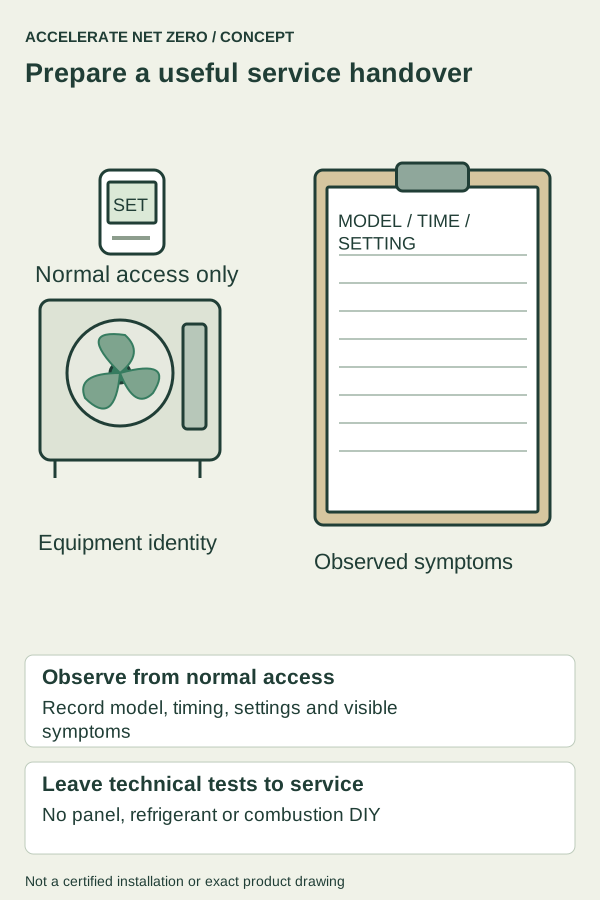
Photograph accessible labels or use installation documents to record the indoor unit, outdoor unit, and thermostat models. A split system has more than one relevant component, so a single outdoor model number may not describe the complete arrangement.
If a label is behind a panel or cannot be read without unsafe access, leave it for the technician. Do not climb, reach past moving parts, or open electrical compartments solely to fill a form before the visit.
Keep the serial number in the service record if requested, but avoid posting it publicly with account information or detailed household schedules. A private service request and an internet troubleshooting forum do not require the same information exposure.
If you do not know whether the equipment is a heat pump, furnace, or cooling-only system, say so and provide the documents you have. Guessing from cabinet shape is less useful than giving the technician an accurate model photograph.
Note how the controls were set
Write down the thermostat's operating mode, setpoint, fan setting, schedule state, and any selected remote sensor. A room complaint can be difficult to understand when the household remembers a temperature but not whether the control was in a temporary hold or following a schedule.
Photograph an error message exactly as displayed, including its code and time. Do not clear it immediately unless the instructions require that action for safety, because the original message may help the service provider understand what happened.
Record what you changed after the problem appeared, such as switching the fan setting or adjusting the temperature. You are not admitting a mistake; you are keeping the sequence visible so the technician can distinguish the original symptom from later behavior.
Avoid changing installer configuration menus or repeatedly resetting equipment while waiting. A reset that temporarily changes the display does not establish that the problem is repaired, and repeated attempts can erase the pattern you were trying to report.
Bring maintenance and change history
Find the most recent service invoice, filter information, and installation paperwork you already have. Note dates and exact work recorded rather than summarizing an invoice as “everything was checked” when its scope was narrower.
For the filter, record the installed type and size and the last inspection or replacement date if known. If you do not remember, label the date unknown instead of inventing an interval that makes the history look more complete.
Mention recent building or household changes, including an addition, new windows, major air sealing, a converted room, or a different work-from-home routine. These details can affect the question the system needs to answer even if the equipment itself has not changed.
Also mention the timing of plumbing leaks, storms, power interruptions, or nearby construction if they coincide with the concern. The sequence is evidence worth sharing, while the technician still needs to determine whether the events are connected.
Choose a few readings that explain the pattern
If you have a room log, select a few representative entries with location, time, temperature, humidity, settings, and relevant events. Do not overwhelm the first call with hundreds of screenshots that lack a clear question or sensor location.
For example, show that the same bedroom is warmer on several sunny afternoons and note its door position and use. If the room is comfortable on a cloudy day, include that too rather than selecting only the readings that support a preferred diagnosis.
Keep instrument limitations visible, especially if different consumer sensors supplied the readings. A small difference within their stated tolerances deserves cautious interpretation, while a repeated comfort complaint can still justify investigation.
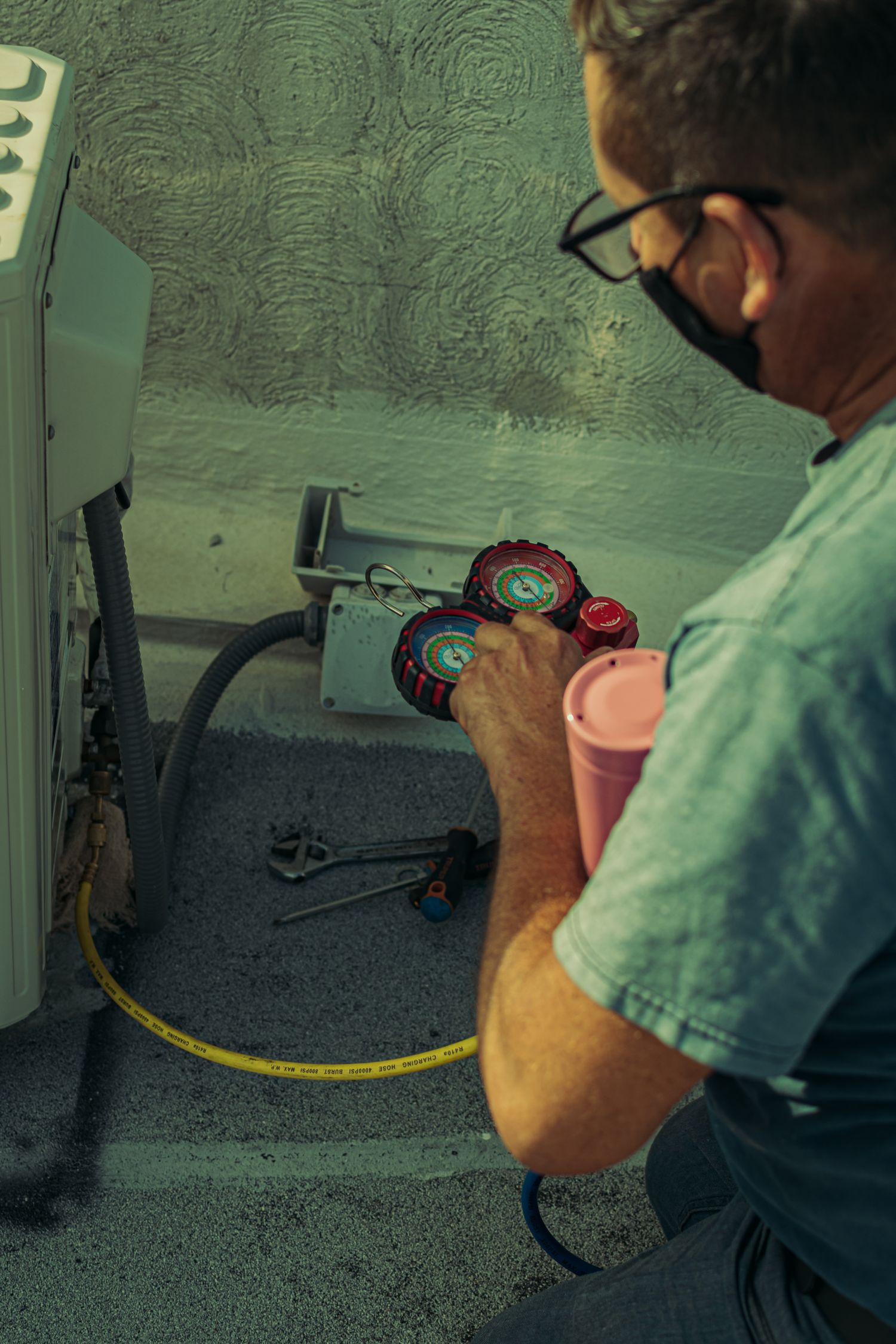
Do not measure electrical current, refrigerant conditions, combustion performance, or internal equipment temperatures as a homeowner preparation task. Ask the professional which measurements they need and how those will help distinguish the possible causes.
Make access and the appointment scope clear
Tell the company where the equipment is and whether normal access has practical constraints, such as a locked gate or a tenant coordination requirement. Clear ordinary storage from the intended service access if safe, without moving fuel lines, electrical connections, or the equipment itself.
Ask whether the visit is an inspection, diagnosis, maintenance service, or a replacement consultation. Those scopes are different, and a quoted visit fee may not include parts, additional testing, or repairs.
Confirm how findings and proposed work will be explained before repairs proceed. You should be able to understand the observed problem, the supporting evidence, the proposed remedy, and any unresolved uncertainty without agreeing to a replacement from a vague description.
At the end of the visit, request the relevant findings in writing and the owner instructions for any changed settings or parts. Keep the paperwork with your original notes so the next service conversation starts from evidence rather than a partly remembered account.
Use a short handover statement
You might prepare: “The back bedroom is warm after lunch, the hallway reaches 74°F, and the issue began after the room became an office; the filter model and service invoice are attached.” Add any safety concerns separately at the beginning of the call.
That statement leaves the technician free to evaluate room use, solar exposure, distribution, controls, and equipment. It is more productive than asking for refrigerant or a larger unit before anyone has established the cause.
After service, revisit the original condition using the same simple observation method. If it persists, report what changed and what remained, because a completed visit and a resolved room complaint are related but different outcomes.
Sources & further reading
- Trane: HVAC Repair Guide for Homeowners — Basic thermostat/filter observations differ from professional equipment repair.
Sources checked October 24, 2026. Product details can change; confirm the exact model and listing before purchase.