Before booking a home energy assessment, ask what the visit includes, which tests are planned, and what written findings you will receive. The phrase can describe anything from a basic walkthrough to a more detailed evaluation, so the useful choice starts with the scope.
Tell the provider about the problems you want to understand, such as drafts, uneven rooms, moisture, or rising energy use. A clear brief helps you judge whether the proposed assessment can answer those questions rather than simply produce a generic list of upgrades.
Describe the house and the concern
Prepare the home's approximate age, major renovations, heating and cooling arrangement, and any known water or comfort problems. Use existing records and normal accessible observations rather than entering attics, crawlspaces, or equipment compartments just to complete the booking form.
Write the question in everyday terms: “The first-floor room feels drafty near the back wall” is useful without a diagnosis. If you have room readings or bill history, identify the dates and measurement locations so the assessor knows what the records represent.
Mention planned work such as siding, roofing, an addition, or HVAC replacement. The timing may create opportunities to coordinate improvements, but the assessment needs to distinguish the current building from the building you intend to have after renovation.
If you rent or share a building, establish the property permissions and scope of equipment access before booking. An assessment of one dwelling may not include common systems or building-wide work outside your control.
Ask what “assessment” means in this offer
Request a written description of the walkthrough, document review, measurements, and report. NYSERDA describes an assessment process involving evaluation, possible testing, and recommendations, but a particular local offer still needs its own explicit scope.
Ask whether the provider reviews historical utility use and how much information it needs. A year of bills can show seasonal patterns, while the provider should explain how weather, occupancy, and other changes affect its interpretation.
Find out whether the work includes heating and cooling equipment, water heating, ducts, insulation, air leakage, ventilation, and moisture observations. Mark items excluded from the offer rather than assuming every part of the home receives the same depth of investigation.
Also ask whether the visit is an independent assessment, a program assessment, or part of a contractor's sales process. Those arrangements can all provide useful information, but knowing the relationship helps you understand the recommendations and any follow-up choices.
Clarify which tests are planned
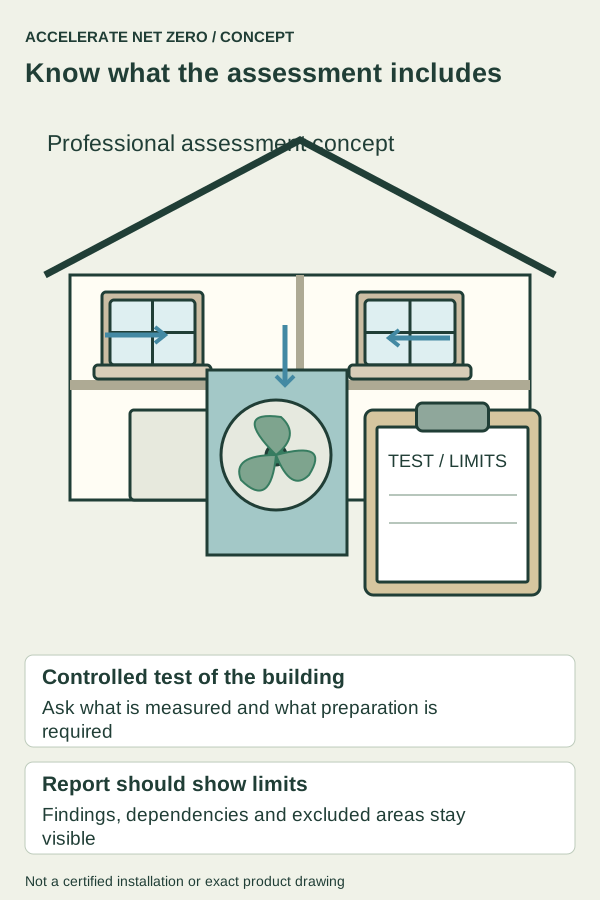
If a blower-door test is proposed, ask what it measures and what preparation and safety checks the provider requires. It uses a controlled pressure difference to investigate air leakage, which is different from simply feeling for a draft on a windy day.
If thermal imaging is offered, ask when it is useful and what conditions the provider needs for interpretation. An attractive color image does not automatically reveal the cause of every wall pattern, and the report should explain its limits.
Ask whether ventilation, combustion safety, or other relevant checks are included when applicable to the home. Do not arrange a test as a stand-alone spectacle while leaving the safety and building-system implications unspecified.
You do not need to operate test equipment or prepare the building through improvised sealing. Follow the provider's specific preparation instructions, and tell it about fireplaces, combustion appliances, known hazards, or other conditions it asks you to disclose.
Check qualifications for the actual work
Ask what training, certifications, licenses, and insurance are relevant to the proposed scope in your location. Verify specific claims through the appropriate issuing body or program rather than assuming a logo on a brochure establishes every credential.
Find out who performs the visit and who interprets the results, especially if subcontractors are involved. You should know whether a specialist is needed for a finding outside the assessor's scope, such as a significant leak, electrical concern, or structural issue.
If a utility or state program supports the assessment, confirm the provider's current participation and the applicable eligibility rules directly. Do not assume a program in another state or an old promotional page describes the terms available to your household.
Ask for a sample report with private information removed if one is available. It can show whether the deliverable explains findings and priorities in language you can use, rather than only listing products and broad savings claims.
Know what happens when access is limited
Tell the provider about inaccessible areas, locked spaces, stored belongings, or known hazards before the visit. Ask which limitations would reduce the assessment's scope and how they will be identified in the report.
Clear ordinary access paths if safe, but do not move heavy equipment, disturb suspected hazardous materials, or enter unsafe spaces to make the visit possible. A limitation recorded honestly is preferable to an unsafe preparation task.
Ask whether the provider will photograph conditions and how those images will be used and shared. Keep personal documents and sensitive household information out of the working area when they are unrelated to the assessment.
If the weather prevents a planned test from being meaningful, ask how the provider handles rescheduling or a changed scope. You want the report to distinguish a completed measurement from an observation that could not be verified under the day's conditions.
Request recommendations with evidence and dependencies
A useful report should connect each recommendation to an observed condition or measured finding. Ask for a distinction between urgent safety or water issues, comfort concerns, maintenance, and longer-term efficiency opportunities.
For each larger project, ask what must happen first and what needs checking afterward. A roof leak should not disappear behind a proposal for more insulation, and air sealing should be considered alongside ventilation and any applicable combustion-safety requirements.
If savings are estimated, request the assumptions, baseline, energy prices, and uncertainty. A modeled estimate can support planning without becoming a guarantee, and the report should not combine overlapping measures as though their savings simply add without interaction.
Ask which recommendations require design or further investigation before pricing. An assessment can identify a promising direction while still leaving equipment sizing, detailed installation work, or a concealed-condition question unresolved.
Compare the fee with the deliverable
Confirm the price, program support if any, visit length expectation, report timing, and whether follow-up explanation is included. Do not choose solely by the lowest advertised fee if the scopes differ substantially.
Ask whether testing after completed work is part of the offer or a separate service. A before-and-after verification plan can matter when the project aims to address a measurable condition, but it should be stated rather than assumed.
If the assessment provider also quotes the improvements, keep the report and the installation proposal as separate documents. That makes it easier to ask another qualified contractor about the same findings without losing the original evidence in a sales package.
Before booking, summarize the agreement in a few lines: the home, your main questions, included tests, safety considerations, access limits, fee, and written output. A provider who confirms that scope gives you a much clearer basis for the appointment.
Plan how you will use the result
Imagine the visit identifies a moisture issue, an air-leakage opportunity, and an aging heating system. Your next step should follow the findings and dependencies rather than automatically buying the most expensive product mentioned.
Use the report to build a staged plan, clarify unresolved items, and obtain comparable scopes for work that needs a contractor. The assessment earns its value when you can understand the evidence and choose a sensible next action for your actual home.
Sources & further reading
- NYSERDA: Home Energy Assessments — Evaluation, possible blower-door testing and recommendations; local scope must be confirmed.
Sources checked October 24, 2026. Product details can change; confirm the exact model and listing before purchase.